










 Bosch
Bosch 
In our previous article, we discussed common forklift issues. Today, we’re diving deeper into the specific components that ensure your equipment stays productive. A forklift that struggles to lift properly can slow down operations, reduce efficiency, and create safety risks—especially in busy warehouses, factories, and ports.
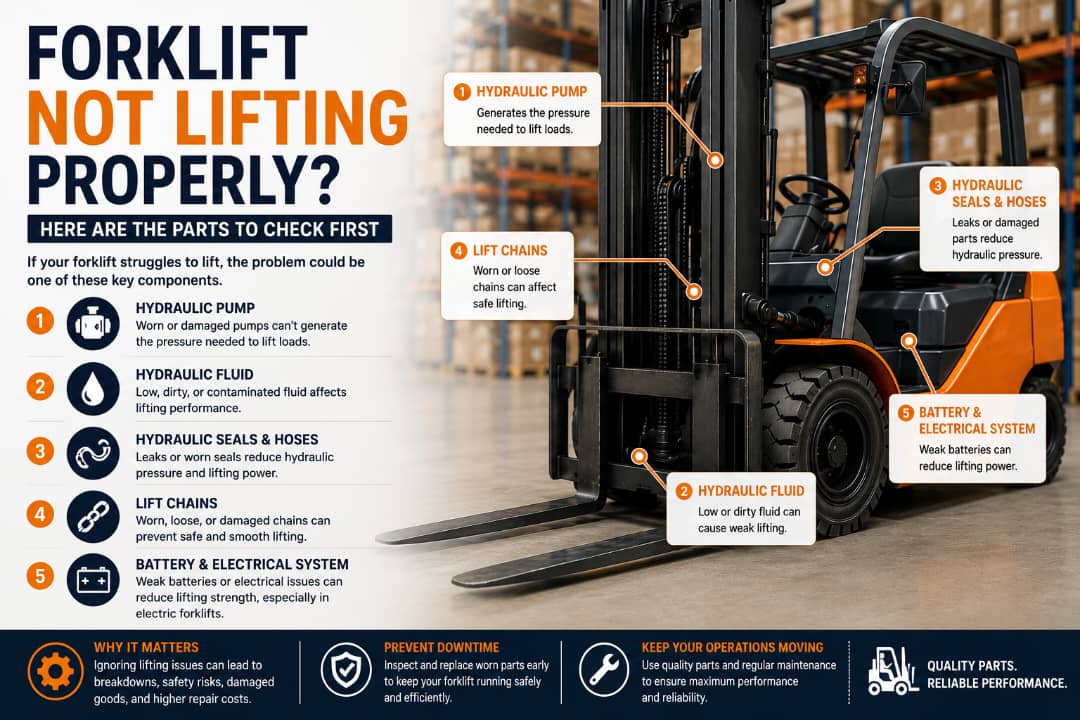
Before a minor glitch becomes a major breakdown, here are the five key forklift parts you should inspect to keep your fleet in top shape.
1. The Hydraulic Pump: The Heart of the Lift
The hydraulic pump is responsible for generating the pressure needed to lift loads. Without a functioning pump, your forklift is just a heavy vehicle.
Signs of Failure to Watch For:
-
Noticeably slow lifting speeds.
-
Weak power when handling standard loads.
-
Forks refusing to rise to their full height.
2. Hydraulic Fluid: The Lifeblood of Your System
Low or contaminated hydraulic fluid affects lifting performance immediately. It is the most overlooked maintenance item in many facilities.
During your daily check, look for:
-
Fluid levels below the recommended line.
-
Dirty, dark, or milky fluid (indicating aeration or water contamination).
-
Puddles or visible leaks under the machine.
3. Hydraulic Seals and Hoses
Hydraulic systems rely on airtight integrity. Even a pinhole leak in a hose or a brittle seal can cause a sudden drop in pressure.
Warning Signs:
-
External oil residue on the mast.
-
Jerky or "stuttering" lifting motions.
-
Sudden, unexpected loss of lifting power during operation.
4. Lift Chains: The Heavy Lifters
Your lift chains handle immense stress every single day. Over time, metal fatigue and environmental factors can weaken them significantly.
Safety Hazards to Inspect:
-
Rust or corrosion that limits link movement.
-
Uneven tension between chains.
-
Visible "stretching" or cracked links.
5. Battery and Electrical System
For electric forklift operators, a weak battery doesn't just affect travel speed; it reduces the amperage available to the lift motor, mimicking hydraulic failure.
Electrical Red Flags:
-
Noticeably sluggish hydraulic response.
-
Reduced capacity at low battery percentages.
-
The need for frequent "opportunity charging."
Don’t Wait for a Breakdown
Delaying repairs is more than an inconvenience—it's a cost center. Unresolved issues lead to equipment downtime, damaged inventory, and higher long-term repair costs.
Expert Parts & Support
At Mamtus, we supply premium spare parts to keep your fleet operational. Whether you need a new hydraulic pump, durable seals, or replacement batteries, we have you covered.